



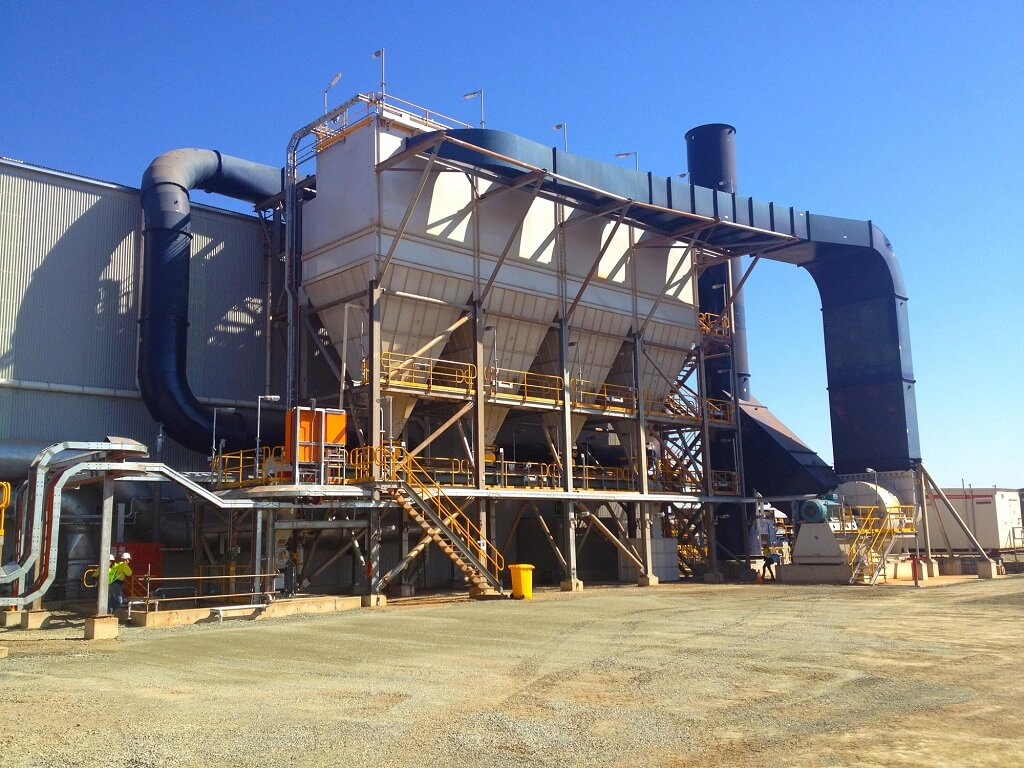
Industrial processes generate a combination of particulate matter and gaseous emissions, requiring carefully engineered solutions for effective air cleaning. Two widely used technologies in industrial air pollution control systems are wet scrubbers and dry baghouse systems.
For plant owners, consultants, and engineers, understanding the difference between these systems is essential for selecting the right approach for specific process conditions.
This guide explains how industrial scrubber systems and baghouse dust collectors differ, where each system performs best, and how to make the right selection.
What Is a Wet Scrubber?
A wet scrubber is an industrial scrubber system that uses a liquid medium to remove pollutants from exhaust gases. It is widely used for acid gas removal, SO₂ scrubbing systems, and treating chemical vapours.
In a wet scrubber:
- Polluted gas comes in contact with a scrubbing liquid
- Gaseous pollutants are absorbed or neutralized
- Cleaned gas exits the system
Common types of wet scrubbers include:
- Venturi scrubbers
- Packed bed scrubbers
- Spray tower scrubbers
These systems are widely used in chemical plants, fertiliser units, refineries, and process industries where gaseous emissions are significant.
What Is a Dry Baghouse System?
A dry baghouse system is a type of baghouse dust collector that uses fabric filter bags to capture particulate matter from industrial air streams.
In this system:
- Dust-laden air passes through filter bags
- Particles are retained on the fabric surface
- Clean air exits through the outlet
Common variants include:
- Pulsejet baghouse
- Reverse air baghouse
Baghouse dust collectors are widely used in industries where dry particulate emissions are dominant, such as steel plants, cement plants, and carbon black production.
Wet Scrubber vs Dry Baghouse (Quick Comparison)
| Aspect | Wet Scrubber | Dry Baghouse |
| Pollutant Type | Gases and fine particles | Dry particulate matter |
| Working Principle | Liquid absorption | Fabric filtration |
| Key Use | Acid gas removal, SO₂ scrubbing system | Fine dust collection |
| Output | Wet sludge | Dry dust |
| Industries | Chemical, Fertiliser, Refineries | Steel, Cement, Carbon Black |
This comparison highlights how wet scrubbers and baghouse dust collectors serve different roles within industrial air pollution control systems.
Key Differences Explained
1. Type of Pollutant Handled
A wet scrubber is designed for gaseous emissions such as acidic gases and chemical vapours.
A dry baghouse system is designed for dry particulate matter, especially fine dust.
2. Working Mechanism
In a wet scrubber, pollutants are removed through interaction with a liquid medium.
In a baghouse dust collector, dust is captured using fabric filters.
3. Industrial Applications
Wet Scrubbers
- Chemical processing
- Fertiliser plants
- Refineries
- Gas treatment systems
Dry Baghouse Systems
- Steel melting shops
- Cement plants
- Carbon black production
- Foundries
4. Output Handling
A wet scrubber produces a liquid or slurry output that is handled through liquid treatment systems.
A baghouse dust collector produces dry dust, which can often be reused or disposed of efficiently.
5. System Integration
In many industries, both systems are used together as part of a complete industrial air pollution control system.
For example:
- Baghouse for particulate removal
- Scrubber for gas cleaning
This integrated approach supports effective industrial air emission control.
When Should You Choose a Wet Scrubber?
A wet scrubber is suitable when:
- Gaseous pollutants are present
- Acid gas removal is required
- SO₂ scrubbing systems are needed
- Chemical vapours must be treated
Industries with significant gas-phase emissions benefit from industrial scrubber systems.
When Should You Choose a Dry Baghouse System?
A baghouse dust collector is suitable when:
- Dust is the primary pollutant
- Fine particulate capture is required
- Continuous operation is needed
- High dust loading conditions exist
Industries such as steel and cement widely rely on baghouse systems for stable dust control.
Role of Engineering in System Selection
Choosing between a wet scrubber and a dry baghouse system requires evaluating:
- Nature of pollutants (gas vs particulate)
- Temperature and moisture conditions
- Process variability
- Maintenance approach
- Integration with other systems
A well-designed industrial air pollution control system ensures that the selected technology aligns with real operating conditions.
Why Integration Matters
Modern industrial plants often combine multiple technologies:
- Dust collection systems
- Baghouse dust collectors
- Industrial scrubber systems
- Electrostatic precipitators
This integrated approach ensures:
- Efficient pollutant removal
- Stable system performance
- Optimized operational efficiency
Conclusion: Selecting the Right System
Both wet scrubbers and dry baghouse systems play important roles in industrial air pollution control systems.
A wet scrubber is ideal for handling gaseous emissions and enabling effective acid gas removal and SO₂ scrubbing systems, while a baghouse dust collector is highly effective for capturing fine particulate matter.
The right solution depends on process requirements, emission characteristics, and system integration strategy.
This is where Ecomak Systems delivers strong value. With expertise in industrial air pollution control systems, Ecomak integrates process understanding, engineering design, and EPC execution to deliver solutions that perform under real industrial conditions.
For industries planning upgrades or new installations, early technical evaluation helps define the right system architecture from the beginning.
In industrial air pollution control, performance is achieved through engineering.