



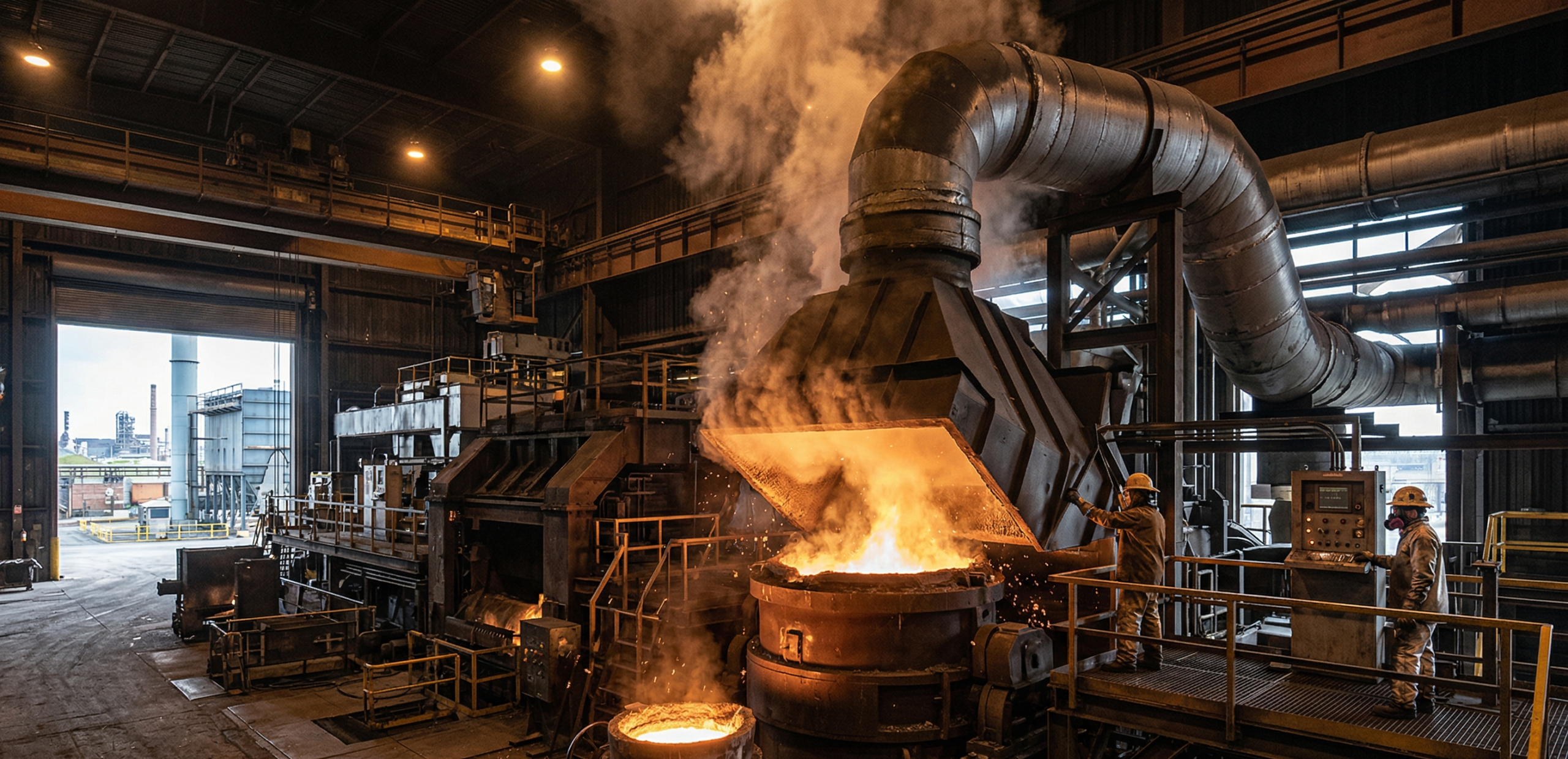
Steel melting shops are high-intensity environments where furnace operations generate significant fumes, dust, and process emissions. Managing these emissions effectively requires well-designed fume extraction systems that perform reliably under real plant conditions.
In modern steel plants, furnace fume extraction systems are engineered to capture emissions during different stages of operation, ensuring effective industrial air pollution control systems.
This blog explains how fume extraction systems are designed for steel melting shops, with a focus on primary and secondary capture systems.
Fume Generation in Steel Melting Shops
Steel melting operations, such as electric arc furnaces (EAF) and induction furnaces, generate emissions during multiple process stages:
- Scrap charging
- Melting
- Refining
- Tapping
- Slag handling
These processes release:
- High-temperature fumes
- Fine particulate matter
- Metal oxides
- Process gases
To manage these emissions efficiently, steel plants rely on integrated fume extraction systems and industrial air emission control systems.
What Is a Fume Extraction System?
A fume extraction system is designed to capture, convey, and filter fumes generated during industrial processes.
In steel melting shops, a typical furnace fume extraction system includes:
- Furnace-mounted or overhead capture hoods
- Ducting network for gas movement
- Fans & Blowers
- Filtration units, such as baghouse dust collectors
These fume extraction systems are designed to handle high-temperature and high-volume emissions typical of steel operations.
Primary Fume Extraction Systems
A primary fume extraction system captures emissions directly from the furnace during active operation.
How Primary Capture Works
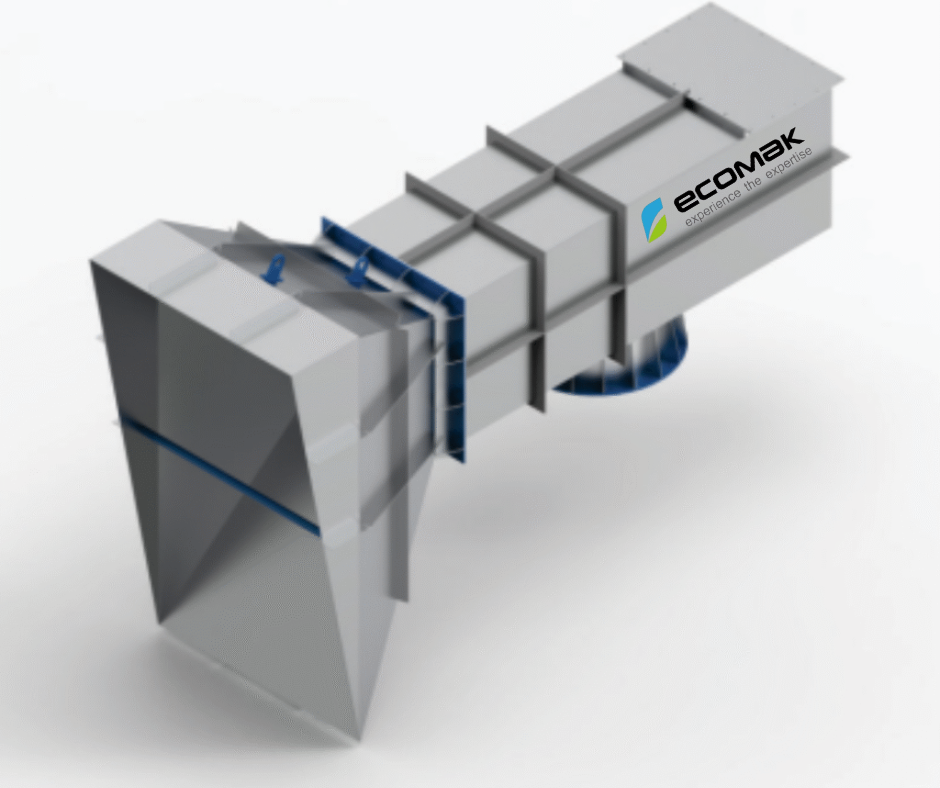
- Fumes are extracted through a furnace suction hood
- Emissions are captured at the point of generation
- Gas is conveyed to a baghouse dust collector for filtration
Where Primary Systems Are Used
Primary capture is active during:
- High-temperature refining stages
- Melting phase
- Oxygen blowing (in EAF)
Key Role of Primary Fume Extraction Systems
- Direct capture of high-concentration emissions
- Controlled flow of process fumes
- Efficient transfer to downstream dust collection systems
Secondary Fume Extraction Systems
A secondary fume extraction system captures emissions that escape to the roof of the shop floor during operations.
Sources of Secondary Emissions
- Scrap charging into the furnace
- Tapping of molten metal
- Slag removal
- Material handling activities
How Secondary Capture Works
Secondary systems typically include:
- Canopy hoods
- Doghouse enclosures
- Roof-mounted suction systems
These systems are designed to capture dispersed fumes that are not handled by the primary fume extraction system.
Key Role of Secondary Systems
- Capture of fugitive emissions
- Improved shop-floor air quality
- Support for overall industrial air pollution control systems
Integration with Fume Extraction Systems
Captured fumes from both primary and secondary systems are routed to fume extraction systems for filtration.
Common filtration methods include:
- Baghouse dust collectors
- Pulsejet baghouse systems
- Reverse air baghouse systems
Engineering Expertise in Fume Extraction Systems
Designing efficient furnace fume extraction systems requires a strong understanding of steel plant operations and emission behaviour.
Engineering-driven companies such as Ecomak Systems specialize in developing fume extraction systems that integrate:
- Primary and secondary capture strategies
- Optimized ducting and airflow design
- High-efficiency dust collection systems
- Robust baghouse dust collectors
With expertise in industrial air pollution control systems, such solutions are tailored to perform under real operating conditions in steel melting shops.
Conclusion
Steel melting shops require well-integrated fume extraction systems to manage emissions across multiple process stages.
Primary fume extraction systems capture emissions directly at the furnace, while secondary fume extraction systems handle fugitive emissions generated during operations such as charging and tapping.
Together with dust collection systems and baghouse dust collectors, these systems form a complete approach to industrial air pollution control systems in steel plants.
With the right engineering approach, furnace fume extraction systems can deliver consistent performance aligned with real plant requirements.