



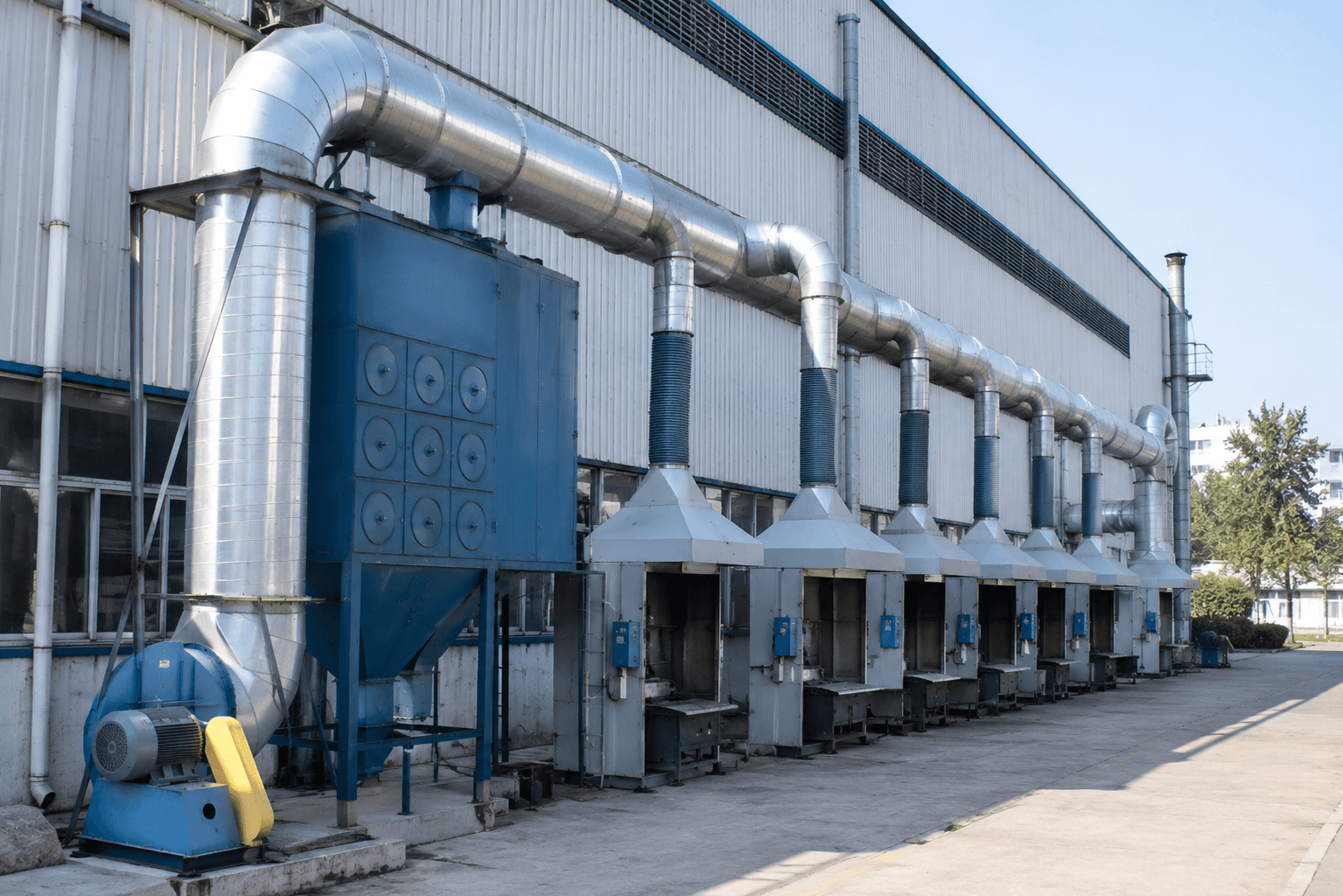
Industrial processes across sectors such as steel, foundry, chemicals, metals, and manufacturing generate fumes that require efficient capture and treatment. As industries continue to focus on operational efficiency and environmental performance, fume extraction systems have become an essential component of modern industrial air pollution control systems.
From steel melting shops to chemical processing facilities, industries rely on well-engineered fume extraction systems to capture emissions at the source and support effective industrial air emission control.
Engineering-led companies such as Ecomak Systems, known for delivering advanced industrial air pollution control systems, develop integrated solutions that align with real plant operating conditions and process requirements.
This guide explores the role of fume extraction systems, their applications, components, and importance in industrial emission management.
What Are Fume Extraction Systems?
A fume extraction system is designed to capture, convey, and filter fumes generated during industrial processes before they disperse into the workplace environment.These systems are commonly used where operations involve:
- High-temperature processing
- Melting and refining
- Welding and cutting
- Chemical reactions
- Material handling
A typical fume extraction system includes:
- Capture hoods
- Ducting network
- Air handling units
- Filtration equipment
- Exhaust and discharge systems
Together, these components create an integrated solution for industrial air pollution control.
Why Fume Extraction Systems Are Important
Industrial fumes often contain fine particulate matter, metal oxides, vapours, and process emissions generated during manufacturing activities. Well-designed fume extraction systems help industries:
- Capture emissions close to the source
- Improve airflow management
- Support efficient industrial air emission control
- Enhance process reliability
- Integrate with broader air pollution control systems
By capturing emissions at the point of generation, these systems contribute to effective plant-wide emission management.
Types of Fume Extraction Systems
Different industries require different extraction approaches based on process conditions and emission characteristics.
1. Source Capture Systems
Source capture systems are designed to collect fumes directly at the point where they are generated. Common applications include:
- Welding stations
- Furnace charging areas
- Metal processing operations
These systems provide efficient capture before fumes disperse into the surrounding area.
2. Canopy Hood Systems
Canopy hoods are installed above emission-generating equipment and rely on natural thermal movement to direct fumes into the extraction system. Applications include:
- Open process vessels
- Material transfer stations
- Mixing and blending operations
Canopy systems are widely used in industries where emissions naturally rise from the process.
3. Furnace Fume Extraction Systems
A furnace fume extraction system is specifically designed for high-temperature industrial processes such as steel melting and metal refining.These systems capture emissions generated during:
- Scrap charging
- Melting operations
- Refining processes
- Tapping activities
In steel plants, furnace fume extraction systems are often integrated with dust collection systems and baghouse dust collectors to provide complete emission control.
Components of a Fume Extraction System
The effectiveness of a fume extraction system depends on the proper integration of multiple components.
Capture Hoods
Capture hoods are positioned near the emission source to collect fumes efficiently. Examples include:
- Side-draft hoods
- Canopy hoods
- Furnace hoods
Proper hood design is essential for maximizing capture efficiency.
Ducting Network
The ducting system transports captured fumes from the source to the filtration unit. Well-designed ductwork ensures:
- Balanced airflow
- Efficient transport velocity
- Consistent system performance
Filtration Systems
Captured fumes are filtered before discharge. Common filtration technologies include:
- Baghouse Dust Collectors
A baghouse dust collector uses fabric filter bags to capture fine particulate matter generated during industrial processes.
- Industrial Scrubber Systems
An industrial scrubber system is used where gaseous pollutants require treatment through liquid absorption. Applications include:
- Acid gas removal
- Chemical vapour treatment
- Process gas cleaning
- Electrostatic Precipitators
An electrostatic precipitator removes fine particles using electrically charged collection plates and is often used in high-volume gas handling applications.
Applications of Fume Extraction Systems Across Industries
Steel Industry
Steel melting shops generate significant furnace fumes during charging, melting, and tapping operations.
Integrated furnace fume extraction systems help capture these emissions and support effective industrial air pollution control.
Foundries and Metal Processing
Foundries rely on fume extraction systems to manage emissions generated during melting, pouring, and finishing operations.
Chemical Industry
Chemical plants use fume extraction systems to capture process vapours and integrate them with industrial scrubber systems for effective gas treatment.
Manufacturing and Fabrication
Welding, cutting, and metal fabrication operations benefit from source-capture fume extraction systems that support efficient emission management.
Engineering Expertise in Fume Extraction Systems
Designing efficient fume extraction systems requires an understanding of process emissions, airflow behaviour, and plant operations.
Companies like Ecomak Systems, recognized for delivering advanced industrial air pollution control systems, specialize in engineering solutions that integrate:
- Furnace fume extraction systems
- Dust collection systems
- Industrial scrubber systems
- Industrial air emission control technologies
Through engineering-driven design and EPC execution, these systems are developed to perform consistently under real industrial conditions.
Conclusion
Modern industries require efficient fume extraction systems to manage emissions generated during manufacturing, processing, and high-temperature operations.
Whether it is a furnace fume extraction system in a steel plant or a source-capture solution in a manufacturing facility, these systems play an important role in supporting effective industrial air pollution control.
When integrated with technologies such as dust collection systems, industrial scrubber systems, and electrostatic precipitators, fume extraction systems contribute to comprehensive air pollution control systems that align with industrial process requirements.
FAQs
A fume extraction system is an engineered solution designed to capture, transport, and filter fumes generated during industrial processes.
Fume extraction systems are widely used in steel plants, foundries, chemical industries, welding operations, and manufacturing facilities.
A furnace fume extraction system is designed to capture emissions generated during furnace charging, melting, refining, and tapping operations.
By capturing emissions at the source and directing them to filtration systems, fume extraction systems contribute to effective industrial air pollution control and industrial air emission control.
Yes. Fume extraction systems are commonly integrated with dust collection systems, industrial scrubber systems, and electrostatic precipitators as part of complete air pollution control systems.