



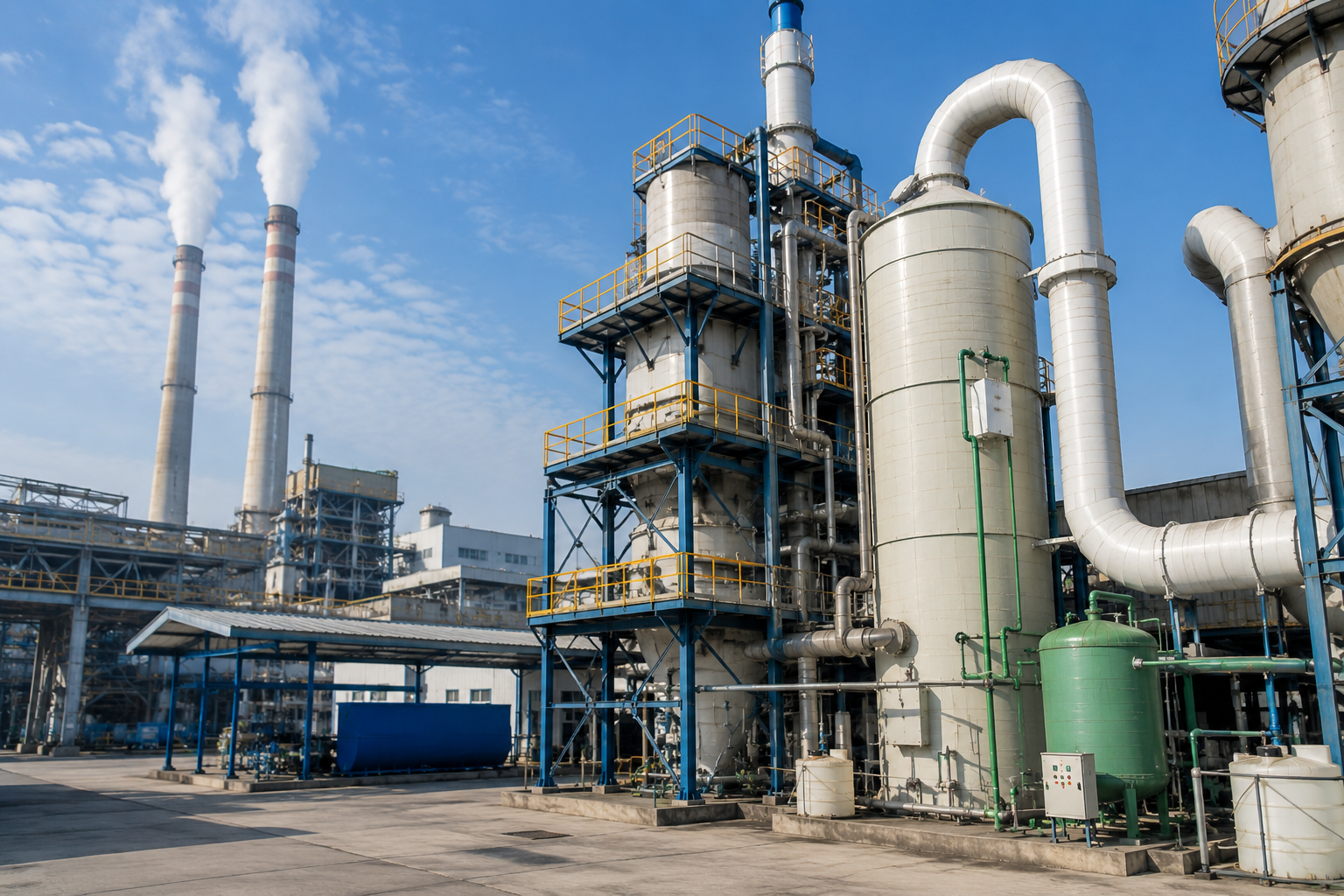
Industrial operations such as power generation, chemical processing, refineries, and metal manufacturing produce flue gases that may contain sulfur dioxide (SO₂). To manage these emissions efficiently, industries rely on SO₂ scrubbing systems, one of the most effective air pollution control systems for removing sulfur compounds from exhaust gases.
As industries continue to invest in advanced Industrial Air Pollution Control Systems, SO₂ scrubbing systems play a vital role in supporting efficient industrial air emission control and integrated industrial emission control solutions.
Engineering-led companies such as Ecomak Systems, known for delivering Industrial Pollution Control Systems for Industries in India, design and execute customized industrial scrubber systems and EPC solutions that align with the operating requirements of diverse industries.
This guide explains how SO₂ scrubbing systems work, where they are used, and how they integrate with other air pollution control equipment.
What is an SO₂ Scrubbing System?
A SO₂ scrubbing system is an industrial scrubber system designed to remove sulfur dioxide (SO₂) from flue gases generated during combustion and industrial processes.
The process involves bringing flue gas into contact with an absorbent solution – typically limestone, lime, or another alkaline reagent – which reacts with sulfur dioxide and removes it from the gas stream before discharge.
In many industries, this process is commonly known as FGD technology (Flue Gas Desulfurization) and forms an essential part of modern industrial air pollution control.
How Does an SO₂ Scrubbing System Work?
A typical SO₂ scrubbing system follows a simple process:
Boiler Exhaust System / Process Furnace → Flue Gas Cleaning System → SO₂ Scrubber → Cleaned Exhaust Gas
The process generally includes:
- Collection of flue gas from the boiler exhaust system or industrial furnace.
- Introduction of the gas into an industrial scrubber system where an alkaline slurry absorbs sulfur dioxide.
- Chemical reaction that converts SO₂ into stable compounds such as gypsum in wet scrubber systems.
- Release of treated gas through the stack as part of an integrated industrial air emission control strategy.
Where Are SO₂ Scrubbing Systems Used?
SO₂ scrubbing systems are widely used across industries where sulfur-containing fuels or raw materials are part of the production process.
Common applications include:
- Thermal power plants
- Chemical manufacturing facilities
- Refineries
- Fertilizer plants
- Metal processing industries
- Industrial boilers
These industries often integrate SO₂ scrubbing systems with broader air pollution control systems to manage multiple types of emissions efficiently.
Integration with Other Air Pollution Control Equipment
An SO₂ scrubbing system is rarely used as a standalone solution. It is typically integrated with other air pollution control equipment to provide comprehensive emission management.
Commonly integrated systems include:
- Electrostatic precipitators for removing fine particulate matter before flue gas enters the scrubber.
- Baghouse dust collectors and baghouse filters for particulate filtration in specific industrial applications.
- Dust collection systems for handling dust generated during material processing.
- Gas cleaning systems that combine particulate and gas-phase pollutant removal.
Together, these technologies form complete Industrial Air Pollution Control Systems capable of managing both particulate and gaseous emissions.
SO₂ Scrubbing System vs. Electrostatic Precipitator
Although both are used in industrial air pollution control, they perform different functions.
| Technology | Primary Function | Typical Application |
| SO₂ Scrubbing System | Removes sulfur dioxide (SO₂) and acidic gases | Power plants, boilers, chemical industries |
| Electrostatic Precipitator | Removes fine particulate matter | Boiler exhaust, thermal power plants, steel plants |
| Baghouse Dust Collector | Captures dust and particulates | Cement, steel, carbon black manufacturing |
Using these technologies together provides a more complete emission control system for industrial applications.
Engineering Considerations for SO₂ Scrubbing Systems
Selecting the right SO₂ scrubbing system depends on several engineering factors, including:
- Sulfur concentration in flue gas
- Gas flow rate
- Flue gas temperature
- Fuel type
- Process requirements
- Space available for installation
Proper engineering ensures that the flue gas cleaning system integrates efficiently with existing air pollution control equipment and supports long-term operational performance.
Companies like Ecomak Systems leverage engineering expertise and EPC solutions to design customized industrial scrubber systems that align with plant-specific process conditions and industry requirements.
Conclusion
Modern industries require efficient and integrated air pollution control systems to manage both particulate and gaseous emissions. Among these technologies, SO₂ scrubbing systems play a critical role in reducing sulfur dioxide emissions from power plants, industrial boilers, and process industries.
When integrated with electrostatic precipitators, baghouse dust collectors, and other gas cleaning systems, SO₂ scrubbing systems contribute to reliable industrial air pollution control and long-term operational efficiency.
For industries evaluating new installations or upgrades, partnering with experienced engineering companies such as Ecomak Systems ensures that industrial scrubber systems and related air pollution control equipment are designed, manufactured, and integrated to meet the unique demands of each process.
FAQs
A SO₂ scrubbing system is an industrial scrubber system that removes sulfur dioxide from flue gases using an alkaline absorbent, helping industries manage gaseous emissions effectively.
FGD technology (Flue Gas Desulfurization) is the broader process used to remove sulfur dioxide from flue gases. An SO₂ scrubbing system is the equipment used to perform this process.
They are commonly used in thermal power plants, chemical industries, refineries, fertilizer plants, and industrial boiler applications.
Yes. They are commonly integrated with electrostatic precipitators, baghouse dust collectors, and other air pollution control systems for comprehensive emission management.