



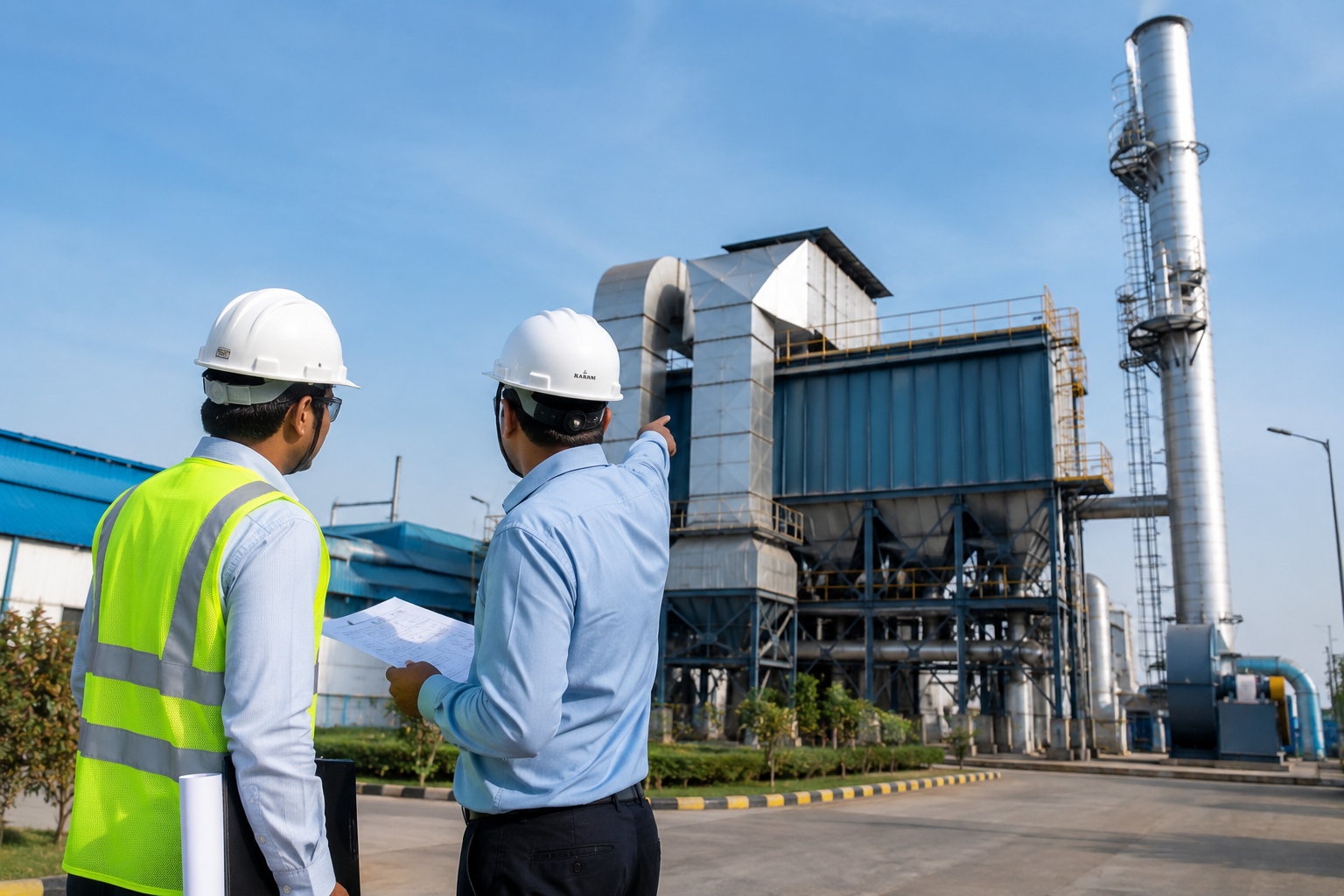
In modern manufacturing, installing Industrial Air Pollution Control Systems is only the first step toward effective emission management. The long-term performance of these systems depends on whether they are properly designed, correctly sized, and aligned with actual plant operating conditions.
This is where an adequacy report becomes an important engineering tool.
An adequacy report for air pollution control systems is a technical evaluation that determines whether installed air pollution control equipment is sufficient to handle the current or projected emission load of a manufacturing plant.
Manufacturing plants increasingly rely on adequacy assessments to evaluate industrial air pollution control, optimize industrial air emission control, and improve the performance of industrial emission control solutions.
Engineering-led organizations such as Ecomak Systems, specializing in Industrial Pollution Control Systems for Industries in India, support manufacturing plants through detailed adequacy evaluations and system performance assessments.
This article explains what an adequacy report is, why it matters, what it evaluates, and when industries should conduct one.
What Is an Adequacy Report?
An adequacy report is a detailed engineering document used to assess whether installed air pollution control systems are capable of handling real process conditions. The report evaluates emission source generation, pollutant characteristics, airflow requirements, equipment sizing, ducting performance, and filtration efficiency.
The objective is to verify whether installed air pollution control equipment in industries can deliver efficient and reliable industrial air emission control.
This assessment becomes especially important in plants where production capacity has increased or process conditions have changed.
Why Is an Adequacy Report Important?
Industrial plants rarely operate exactly as they did during initial commissioning. Over time, changes may occur in production capacity, raw material characteristics, process chemistry, equipment layout, and operating cycles. These changes directly impact emission load.
Even well-designed air pollution control systems may require technical reassessment as plant operations evolve. A well-prepared adequacy report helps manufacturing plants answer critical questions:
- Is the installed air pollution control equipment properly sized?
- Is airflow adequate for pollutant capture?
- Are gas cleaning systems performing efficiently?
- Can the system support future expansion?
This makes adequacy reports essential for long-term industrial air pollution control.
When Should Manufacturing Plants Conduct an Adequacy Report?
Manufacturing plants commonly conduct an adequacy assessment during the following scenarios:
1. Capacity Expansion: Higher production often increases dust, fumes, and gas load.
2. Process Modifications: Changes in production processes alter emission characteristics.
3. Retrofit or Upgrade Planning: Before investing in upgrades, plants assess existing air pollution control equipment.
4. EPC Evaluation: During plant expansion or modernization, adequacy analysis supports better engineering decisions.
5. Performance Optimization: Plants seeking improved industrial emission control solutions often begin with adequacy evaluation.
What Does an Adequacy Report Evaluate?
A comprehensive adequacy report for air pollution control systems evaluates multiple engineering parameters.
1. Emission Source Assessment
The first step is identifying all emission sources. Typical sources include furnace operations, boilers, material transfer points, crushers, reactors, and bulk material storage.
Industries such as steel melting shops, chemical plants, cement plants, and carbon black plants often have multiple emission sources requiring detailed evaluation.
2. Airflow Requirement Analysis
Airflow is one of the most important parameters in Industrial Air Pollution Control Systems. The adequacy report evaluates required airflow, actual airflow, capture velocity, air balancing, and static pressure.
Improper airflow can affect capture efficiency in Fume Capture Systems, dust collection systems, and industrial gas cleaning systems.
3. Equipment Capacity Evaluation
This section determines whether installed air pollution control equipment in industries is capable of handling current emission loads.
Common equipment evaluated includes:
- Dust collection systems
- Industrial dust collection systems
- Baghouse dust collectors
- Baghouse filters
- Electrostatic precipitators for air pollution control
- Industrial scrubber systems
- Exhaust gas scrubbers
- Furnace fume extraction systems
- Dust fume extraction systems
- Gas cleaning systems
The report checks whether these systems are properly sized for actual plant operations.
4. Ducting & Pressure Drop Analysis
Duct design directly affects industrial air emission control. The adequacy report evaluates duct diameter, routing efficiency, pressure losses, leakage points & fan performance.
This helps ensure efficient flow from emission source to treatment system.
Who Prepares an Adequacy Report?
An adequacy report for air pollution control systems is typically prepared by:
- Environmental consultants
- EPC engineering companies
- Process engineering specialists
- Air pollution control equipment manufacturers
Companies like Ecomak Systems, with expertise in Air Pollution Control Solutions and Environmental engineering solutions, provide engineering-led adequacy assessments by evaluating emission load, process requirements, and system capability as an integrated whole.
Conclusion
An adequacy report is one of the most valuable engineering tools in industrial air pollution control.
It helps manufacturing plants determine whether installed air pollution control equipment is sufficient for present operations and future expansion.
From dust collection systems and baghouse dust collectors to industrial scrubber systems, electrostatic precipitators, and furnace fume extraction systems, every component must be aligned with actual plant conditions.
For industries planning optimization, expansion, or technical evaluation, an engineering-led adequacy report for air pollution control systems provides clarity, confidence, and long-term operational efficiency.
FAQs
An adequacy report is a technical engineering assessment that evaluates whether installed air pollution control systems can efficiently manage actual plant emissions.
Industries use adequacy reports to assess equipment capacity, airflow, system performance, and readiness for expansion.
Typical systems include dust collection systems, baghouse dust collectors, industrial scrubber systems, electrostatic precipitators, and fume extraction systems.
Environmental consultants, EPC companies, and air pollution control equipment manufacturers typically prepare adequacy reports.