



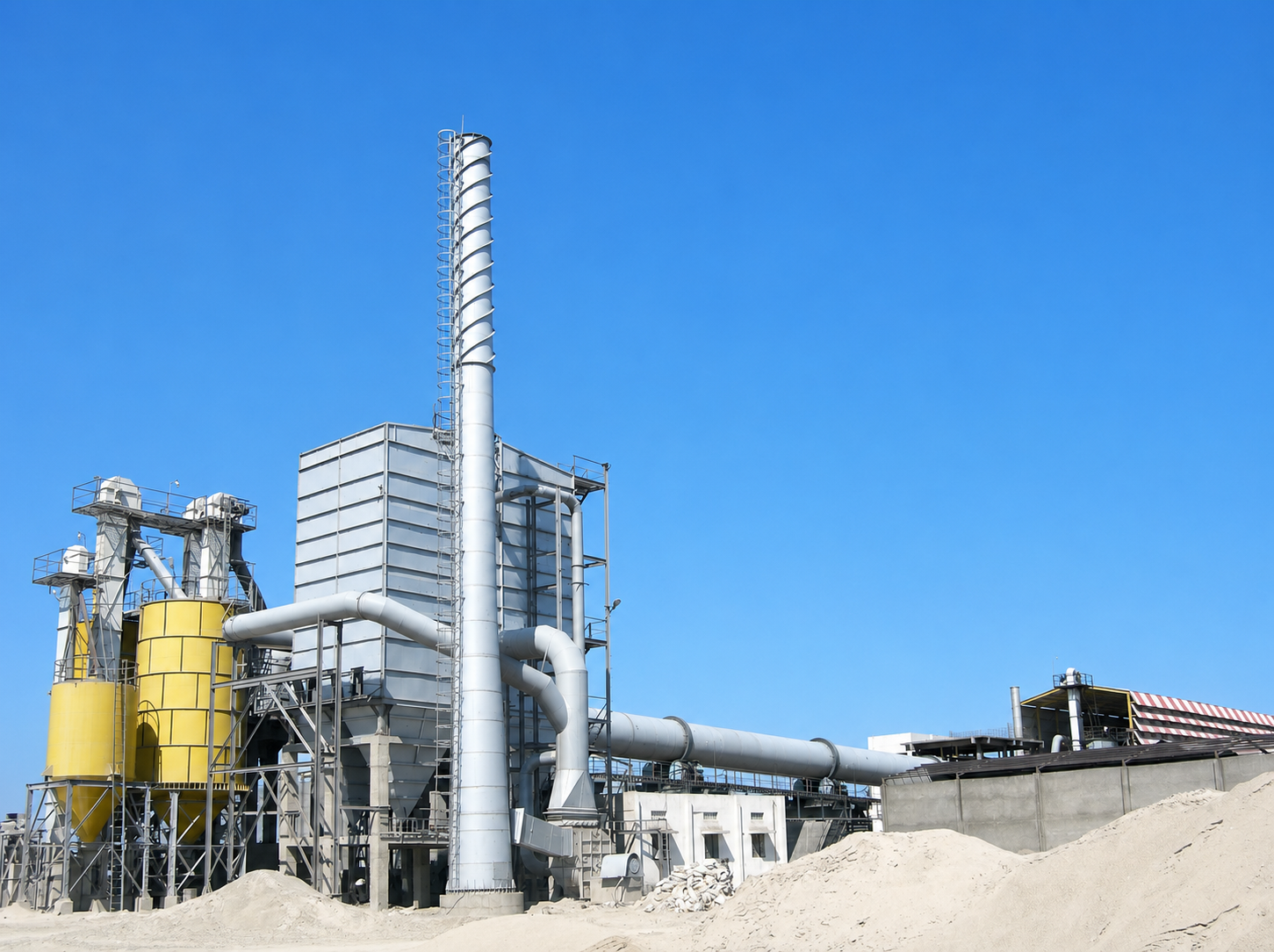
An industrial dust collection system is a critical part of modern Industrial Air Pollution Control Systems, connecting dust and fume capture points to filtration equipment for effective collection and treatment of process emissions. In manufacturing plants, a well-designed duct network helps transport dust-laden air from equipment, production areas and material transfer points to a suitable dust collector.
For industries such as steel, cement, chemical processing and carbon black manufacturing, duct design directly influences airflow distribution, pressure drop, dust transport and overall system performance. Integrating the duct network with hoods, fans and filtration equipment creates a complete Industrial dust collection system tailored to process requirements.
This guide covers the design principles, major components, industrial applications and selection criteria for industrial dust collection systems, with a focus on practical engineering considerations.
What Is an Industrial Dust Collection System?
An industrial dust collection system is the interconnected network of hoods, branch ducts, main ducts, dampers and fans used to capture and transport dust-laden air from industrial processes to a collection or filtration unit.
It is often part of a broader Industrial dust collection system, which may include a Baghouse dust collector, cyclone, Bag filter, or other Particulate cleaning systems.
The system follows a basic process:
Dust generation → Source capture → Duct transportation → Dust separation and filtration → Treated air discharge
The duct network is essential because even a correctly selected dust collector depends on suitable airflow reaching it from every connected pickup point.
Key Components of an Industrial Dust Collection System
1. Capture Hoods and Pickup Points
Hoods capture dust close to where it is generated, such as crushing, grinding, conveying, furnace operations and material transfer. Hood position and geometry influence the airflow needed for effective capture. In fume-generating processes, Fume Capture Systems may be integrated into the same network or designed as a dedicated extraction system.
2. Branch and Main Ducts
Ducts connect individual pickup points to the main collection line. Their diameter, routing, material and fittings must suit the airflow and dust characteristics. Well-planned Industrial dust collection ductwork helps maintain transport velocity and manage pressure losses.
3. Dampers and Balancing Devices
Branch dampers help regulate airflow between different extraction points. Correct balancing helps distribute suction according to operating requirements, particularly when multiple machines share one Dust collection system.
4. Industrial Fan
The fan generates the pressure required to move air through hoods, ducts, filtration equipment and discharge arrangements. Fan selection depends on the total airflow and system pressure drop.
5. Dust Collector and Filtration Equipment
Depending on the application, the duct network can connect to a Baghouse collector, cyclone or other suitable filtration equipment. Pre-collectors can separate coarse particles before the gas reaches downstream filtration.
Industrial Dust Collection System Design: Key Considerations
Effective Industrial air pollution control requires the entire collection network to be designed as one coordinated system.
- Airflow calculation: Determine the required airflow at each hood based on the source, capture arrangement and operating conditions.
- Duct sizing: Select duct dimensions to provide suitable conveying velocity for the specific dust.
- Pressure drop: Account for friction in straight ducts, elbows, branches, dampers, hoods and filtration equipment.
- Airflow balancing: Ensure each pickup point receives its intended airflow under the relevant operating conditions.
- Dust characteristics: Consider particle size, density, abrasiveness, moisture and temperature.
- Maintenance access: Provide suitable access for inspection, cleaning and maintenance.
Duct velocity should not be selected using one universal value. Fine powders, heavy particles and moist dust can require different conveying conditions. Engineering references on industrial ventilation highlight the importance of matching duct velocity to contaminant characteristics.
Applications Across Industries
| Industry | Typical dust collection applications |
| Steel plants | Furnace fume extraction, casting and material transfer |
| Cement plants | Crushing, grinding, conveying and bulk material storage |
| Carbon black manufacturing | Process dust collection and product handling |
| Chemical industries | Powder transfer, mixing and process dust extraction |
| Power plants | Coal handling, crushing and selected boiler-related processes |
These applications may require different combinations of Industrial dust collectors, Baghouse dust collection systems, Electrostatic precipitator systems and other Air pollution control equipment depending on the gas stream and process requirements.
Common Design Approaches for Industrial Dust Collection Systems
| Design approach | Best suited for |
| Centralised collection | Multiple dust sources connected to a common collector |
| Dedicated extraction | Individual processes requiring separate collection |
| Zoned duct networks | Plants with different operating areas or production schedules |
| Multi-stage collection | Processes requiring pre-collection followed by fine filtration |
The appropriate arrangement depends on the number of sources, their simultaneous operating requirements, dust characteristics and available installation space.
How Ecomak Supports Industrial Dust Collection
Ecomak Systems develops Industrial Air Pollution Control Systems that integrate source capture, ductwork, dust collection and filtration according to industrial process requirements.
Its particulate-cleaning portfolio includes Baghouse dust collectors, electrostatic precipitators, scrubbers, mechanical dust collectors, pre-collectors, and Fume Capture Systems. These technologies can be selected and integrated according to gas flow, particulate characteristics, temperature and process requirements.
For plants requiring a complete solution, this system-level approach helps align the duct network with the selected filtration equipment and overall Industrial air emission control objectives.
Explore Ecomak’s solutions:
How to Select an Industrial Dust Collection System Manufacturer in India
When evaluating air pollution control equipment manufacturers in India, consider the following:
- Engineering capability: Can the provider calculate airflow, pressure drop and duct dimensions for your process?
- Application experience: Does the provider understand the dust characteristics and operating conditions of your industry?
- Integrated equipment: Can the duct network be coordinated with hoods, fans, collectors and dust discharge systems?
- Installation and commissioning: Can the complete system be checked and balanced after installation?
- Expansion planning: Can the design accommodate additional pickup points or future production capacity?
Selecting a provider with integrated engineering and project execution capabilities can help ensure that ductwork and filtration equipment function as one coordinated Pollution control system for industries.
Conclusion
Industrial Dust Collection Systems are an essential part of effective industrial dust collection systems, linking dust-generation points with suitable filtration equipment. Their performance depends on coordinated hood design, duct sizing, conveying velocity, pressure-drop calculations, airflow balancing and collector selection.
For industries planning a new installation or upgrading an existing network, a complete engineering assessment can help match the duct system to the process and its operating requirements. Ecomak’s integrated approach to Air Pollution Control Solutions brings together particulate collection, filtration and fume capture technologies for diverse industrial applications.
FAQs
What is an industrial dust collection system?
An Industrial dust collection system is a network of hoods, ducts, dampers and fans that captures and transports dust-laden air to a dust collector or filtration unit. It typically forms part of a complete industrial dust collection system.
How is duct size calculated for dust collection?
Duct size is calculated using the required airflow and selected conveying velocity. Engineers also consider dust properties, pressure losses, duct routing and the airflow needed at each capture point.
What is the difference between ductwork and a dust collector?
Ductwork transports dust-laden air from the source to the treatment equipment. A Dust collector separates particulate matter from that air. Both must be appropriately sized and integrated for effective system performance.
Which industries use industrial dust collection systems?
Steel, cement, chemical processing, carbon black, power, mineral processing and other manufacturing industries use industrial dust collection systems for dust extraction, fume capture and material-handling applications.
Can a dust collection system connect multiple machines?
Yes. Multiple machines or pickup points can connect to a centralised system when the duct layout, fan capacity, branch airflow and operating schedules are properly engineered.
Why is airflow balancing important?
Airflow balancing helps deliver the required suction to each pickup point. It supports effective source capture and helps maintain suitable dust-transport conditions throughout the network.