



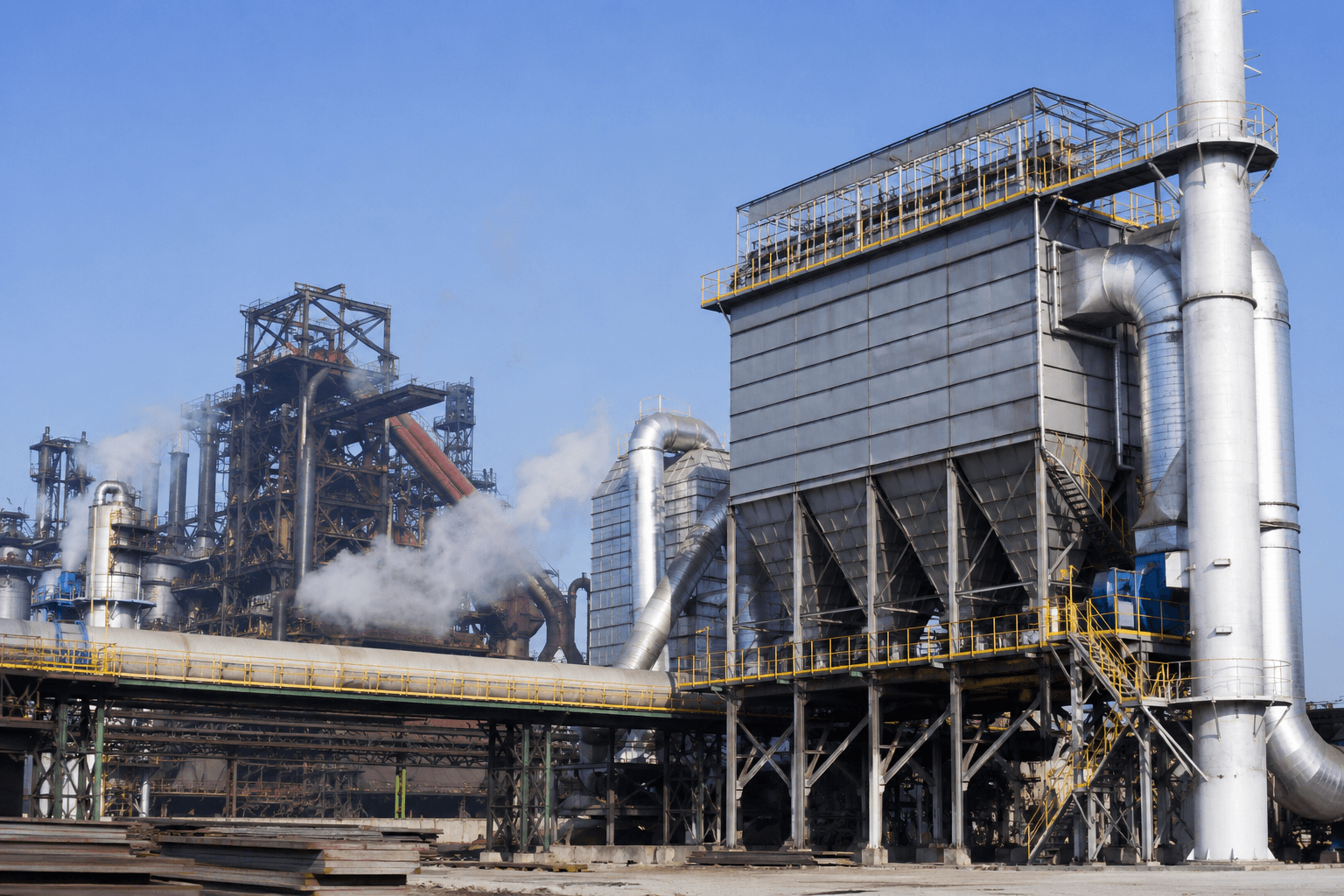
Steel plants operate through high-temperature and material-intensive processes that generate particulate matter, furnace fumes, combustion exhaust, and process emissions. Managing these emissions efficiently requires specialized air pollution control equipment designed specifically for steel manufacturing environments.
From steel melting shops and rolling mills to sinter plants and blast furnace operations, industries rely on advanced air pollution control equipment in industries to maintain smooth plant operations and effective industrial air emission control.
This is where experienced air pollution control equipment manufacturers play an important role by designing systems that align with real operating conditions in steel plants.
Engineering-led companies such as Ecomak Systems, recognized among leading air pollution control equipment manufacturers in India, contribute to developing integrated solutions for steel plant operations through process understanding, engineering expertise, and EPC execution.
This blog explains the types of air pollution control equipment used in steel plants, what industries should look for in manufacturers, and how engineering-driven solutions support long-term performance.
Why Steel Plants Require Specialized Air Pollution Control Equipment
Steel production involves multiple processes that generate emissions at different stages. These include:
- Raw material handling
- Furnace charging
- Melting and refining
- Slag handling
- Material transfer and conveying
- Combustion exhaust systems
Common emissions generated in steel plants include:
- Furnace fumes
- Fine particulate matter
- Metal oxides
- Dust from material handling
- Combustion gases
Managing these emissions requires well-engineered air pollution control systems integrated across the plant.
Types of Air Pollution Control Equipment Used in Steel Plants
Steel plants use multiple technologies depending on the process and type of emissions.
1. Dust Collection Systems
A dust collection system is widely used in steel plants for particulate control during crushing, conveying, screening, and material transfer operations. Common systems include:
- Baghouse dust collectors
- Pulsejet baghouse systems
- Reverse air baghouse systems
- Mechanical dust collectors
These systems support effective industrial air pollution control by capturing fine particulate matter generated during production.
Applications in Steel Plants
- Raw material handling systems
- Crushing and screening areas
- Conveyor transfer points
- Steel melting shops
2. Furnace Fume Extraction Systems
A furnace fume extraction system is essential in steel melting shops where high-temperature furnace operations generate process fumes. These systems capture emissions during:
- Scrap charging
- Melting
- Refining
- Tapping operations
In steel plants, fume extraction systems are typically designed using:
- Primary capture systems
- Secondary canopy extraction systems
- Doghouse enclosures
Efficient furnace fume extraction systems help maintain reliable industrial air emission control during furnace operations.
3. Electrostatic Precipitators (ESP)
An electrostatic precipitator is used for handling large gas volumes generated during combustion and thermal processes.
These systems:
- Use electrical charge for particle separation
- Support efficient particulate removal
- Perform effectively in large-scale operations
Applications in Steel Plants
- Boiler exhaust systems
- Sinter plants
- Blast furnace gas cleaning
Electrostatic precipitators complement other air pollution control equipment in industries handling high-volume process gases.
4. Industrial Scrubber Systems
An industrial scrubber system is used in steel plants where gaseous pollutants require treatment. Applications include:
- Acid gas removal
- Process gas cleaning
- Exhaust gas treatment
Common scrubber types include:
- Packed bed scrubbers
- Venturi scrubbers
- Spray tower scrubbers
These systems support effective industrial emissions air pollution control in process-intensive operations.
What Steel Plants Should Look for in Air Pollution Control Equipment Manufacturers
Selecting the right air pollution control equipment manufacturers requires evaluating engineering capabilities beyond equipment supply. Key considerations include:
1. Industry-Specific Experience
Steel plants operate under demanding conditions involving high temperatures, fluctuating loads, and large gas volumes.
Experienced air pollution control equipment manufacturers in India understand process-specific requirements across:
- Steel melting shops
- Blast furnaces
- Rolling mills
- Sinter plants
2. Engineering & EPC Capability
Strong manufacturers provide integrated EPC solutions covering:
- Engineering design
- Process evaluation
- Manufacturing
- Installation and commissioning
An EPC-driven approach ensures that air pollution control equipment functions efficiently as an integrated system.
3. Process-Based System Design
Every steel plant has unique operating conditions. Reliable air pollution control equipment manufacturers focus on:
- Airflow design
- Hood positioning
- Ducting layout
- Equipment sizing
- Structural integration
This improves long-term industrial air pollution control performance.
4. Integration of Multiple Systems
Steel plants often require a combination of:
- Dust collection systems
- Furnace fume extraction systems
- Electrostatic precipitators
- Industrial scrubber systems
Well-integrated air pollution control systems support stable performance across all stages of production.
Role of EPC in Steel Plant Air Pollution Control
The role of EPC becomes especially important in steel projects due to complex layouts and multiple emission sources. An EPC-driven approach ensures:
- Emission source mapping
- Engineering coordination
- Efficient system integration
- Structural alignment with plant operations
This supports effective industrial air emission control across the plant.
Engineering Expertise in Air Pollution Control Equipment for Steel Plants
Designing air pollution control equipment for steel plants requires a deep understanding of furnace operations, material handling systems, and process variability.
Companies like Ecomak Systems, recognized among trusted air pollution control equipment manufacturers in India, specialize in delivering integrated solutions for steel plants including:
- Dust collection systems
- Furnace fume extraction systems
- Industrial scrubber systems
- Electrostatic precipitators
With expertise in industrial air pollution control, engineering-led solutions are developed to align with actual plant conditions and long-term operational performance.
Conclusion
Steel plants require specialized and well-integrated air pollution control equipment to manage emissions generated across multiple stages of production.
From dust collection systems and furnace fume extraction systems to electrostatic precipitators and industrial scrubber systems, each technology contributes to effective industrial emissions air pollution control.
Choosing experienced air pollution control equipment manufacturers with strong engineering and EPC capabilities helps ensure systems are aligned with real steel plant operating conditions.
As steel manufacturing continues to evolve, integrated air pollution control systems remain essential for reliable and efficient plant performance.
FAQs
Steel plants commonly use dust collection systems, furnace fume extraction systems, electrostatic precipitators, and industrial scrubber systems.
A furnace fume extraction system captures emissions generated during melting, refining, and tapping operations in steel melting shops.
Air pollution control equipment manufacturers design and integrate systems tailored to steel plant operations, ensuring effective industrial air emission control.
Steel plants should evaluate industry experience, engineering capability, EPC expertise, and process-specific system design.