



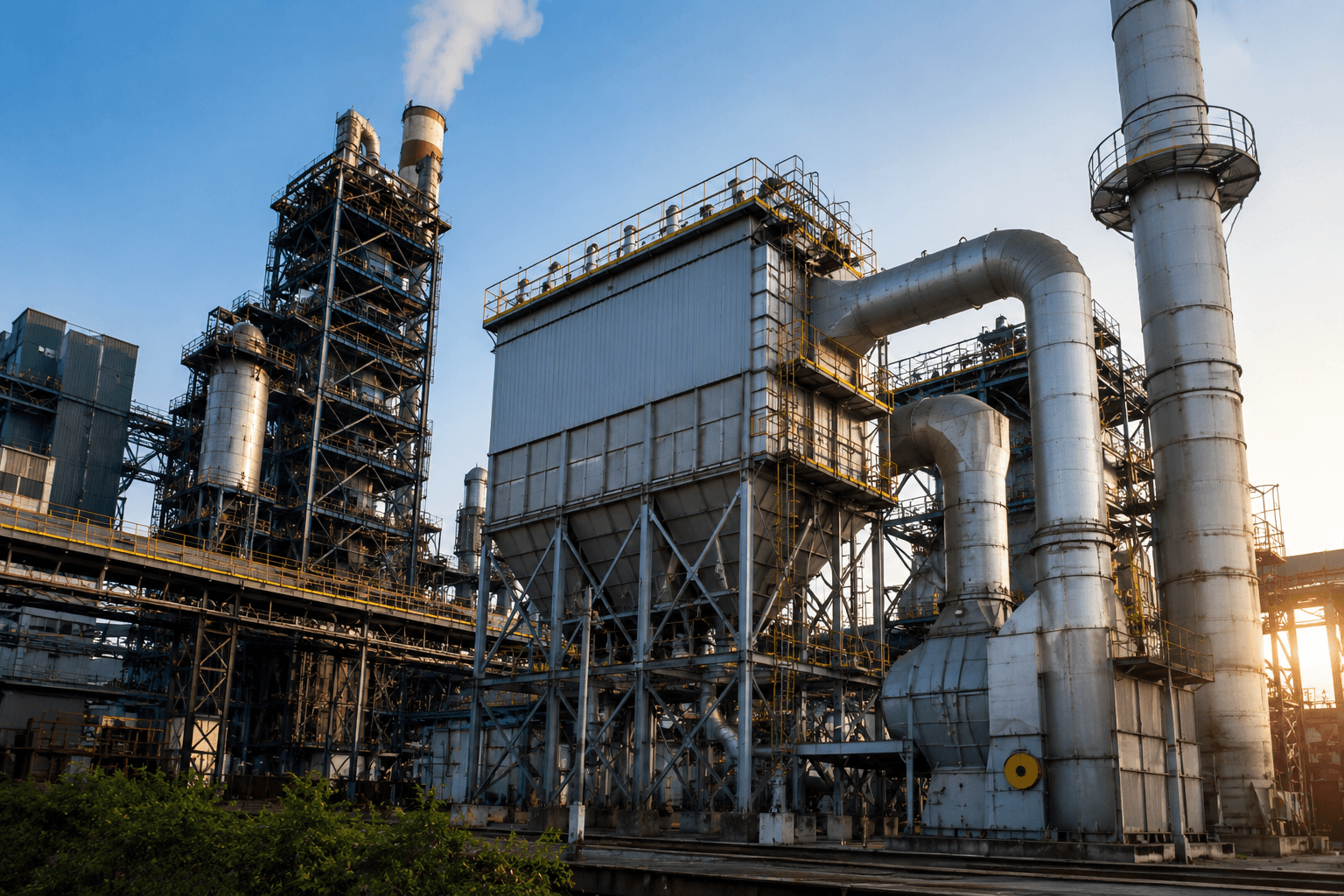
Industrial operations across sectors such as steel, cement, chemicals, power, metals, and process manufacturing depend on reliable emission management systems for smooth and efficient operations. As industries continue to evolve, the role of air pollution control equipment has expanded from standalone equipment to fully integrated engineering solutions.
This is where EPC – Engineering, Procurement, and Construction- plays a vital role in ensuring that air pollution control equipment in industries performs efficiently under real operating conditions.
Engineering-led companies such as Ecomak Systems, known for delivering advanced Industrial Pollution Control Systems for Industries in India, contribute to designing and executing integrated solutions aligned with process-specific requirements.
This guide explains the role of EPC in air pollution control equipment manufacturing, why it matters, and how it supports long-term industrial air pollution control.
What Is EPC in Air Pollution Control Equipment Manufacturing?
EPC stands for:
- Engineering: Designing systems based on process requirements
- Procurement: Sourcing components and materials
- Construction: Manufacturing, installation, and commissioning
In the context of air pollution control equipment, EPC ensures that every component, from capture systems and ducting to filtration and exhaust, functions as one integrated solution.
Rather than treating equipment as standalone units, EPC focuses on creating complete air pollution control systems designed around plant conditions and process variability.
Why EPC Matters in Industrial Air Pollution Control
Modern industrial air pollution control requires more than selecting individual equipment. Every industrial process generates unique emission characteristics based on raw materials, temperature, production cycles, and operating conditions.
An EPC-driven approach helps ensure:
- Process-specific system design
- Efficient airflow and capture efficiency
- Seamless integration of equipment
- Long-term operational performance
- Stable industrial air emission control
This is especially important in sectors such as steel, chemicals, cement, energy, and non-ferrous metals, where emissions vary significantly across operations.
Key Stages of EPC in Air Pollution Control Equipment Manufacturing
1. Engineering & Process Evaluation
The first stage of EPC begins with a detailed engineering assessment.
This includes:
- Emission source mapping
- Process evaluation
- Airflow requirement calculations
- Equipment sizing and selection
- Layout planning
The goal is to determine the right combination of air pollution control equipment in industries based on actual process conditions.
For example, a steel plant may require:
- Dust collection systems for particulate control
- Fume extraction systems for furnace emissions
- Industrial scrubber systems for gas treatment
A process-specific engineering approach ensures reliable industrial emissions air pollution control.
2. Procurement & Equipment Selection
The procurement phase focuses on sourcing and manufacturing components required for complete system integration.
Depending on process requirements, this may include:
- Baghouse dust collectors
- Electrostatic precipitators (ESP)
- Industrial scrubber systems
- Fume extraction systems
- Ducting and airflow components
At this stage, air pollution control equipment manufacturers ensure that system components align with design specifications and operational requirements.
The integration of the right materials and technologies plays a significant role in long-term system efficiency.
3. Manufacturing & Construction
During this stage, engineered systems move into fabrication and installation.
This includes:
- Structural fabrication
- Equipment manufacturing
- Site erection
- Ducting installation
- Structural integration
In Industrial Pollution Control Systems for Industries in India, proper construction ensures that air pollution control systems are aligned with actual plant layouts and process flow.
A well-coordinated EPC approach supports efficient installation and system reliability.
4. Testing & Commissioning
Once installation is complete, systems undergo testing and commissioning to ensure they perform as intended.
This stage includes:
- Airflow balancing
- System tuning
- Equipment synchronization
- Performance checks
Testing helps verify that the integrated air pollution control equipment functions efficiently under real production conditions.
Types of Air Pollution Control Equipment Used in EPC Projects
A successful EPC project integrates various types of air pollution control equipment to meet industrial requirements.
Dust Collection Systems
A dust collection system is used to remove particulate matter generated during grinding, crushing, conveying, and material handling.
Common solutions include:
- Baghouse dust collectors
- Pulsejet baghouse systems
- Reverse air baghouse systems
These systems are widely used in steel, cement, and carbon black industries.
Industrial Scrubber Systems
An industrial scrubber system is widely used for industrial air emission control, especially in chemical and process industries.
Applications include:
- Acid gas removal
- Chemical vapour treatment
- SO₂ scrubbing systems
These systems play an important role in industries where gaseous emissions are prominent.
Electrostatic Precipitators (ESP)
Electrostatic precipitators are commonly integrated into EPC projects involving:
- Boiler exhaust systems
- Thermal power plants
- High-volume gas handling processes
These systems support efficient particulate removal in large-scale operations.
Fume Extraction Systems
A fume extraction system captures emissions at the source, especially in:
- Steel melting shops
- Furnace operations
- High-temperature industrial processes
These systems are often integrated with dust collection systems for complete industrial air pollution control.
Role of EPC Across Different Industries
The role of EPC in air pollution control equipment manufacturing varies across industries.
Steel & Metals Industry
EPC solutions integrate dust collection systems, fume extraction systems, and electrostatic precipitators for melting and refining operations.
Chemical Industry
Chemical plants rely on industrial scrubber systems and acid gas removal systems for handling process gases.
Energy & Power
Power plants often use electrostatic precipitators and air pollution control systems for combustion exhaust treatment.
Cement & Mineral Processing
Dust-intensive industries benefit from integrated air pollution control equipment in industries such as baghouse filtration and dust handling systems.
Engineering Expertise in Air Pollution Control Equipment Manufacturing
Designing integrated air pollution control systems requires a strong understanding of process conditions, emission behaviour, and system coordination.
Companies like Ecomak Systems, recognized among leading air pollution control equipment manufacturers in India, specialize in delivering EPC-driven solutions for diverse industrial applications.
With expertise in:
- Industrial air pollution control
- Industrial air emission control
- Industrial scrubber systems
- Dust collection systems
- Fume extraction systems
Engineering-led EPC execution ensures that systems are designed for consistent performance under real plant conditions.
Conclusion
The role of EPC in air pollution control equipment manufacturing extends far beyond equipment supply.
From engineering and procurement to construction and commissioning, EPC ensures that air pollution control equipment in industries functions as an integrated solution tailored to process requirements.
Whether it involves industrial scrubber systems, dust collection systems, or advanced air pollution control systems, an engineering-led EPC approach supports reliable industrial emissions air pollution control across sectors.
With growing industrial complexity, EPC continues to play an essential role in building efficient and well-integrated Industrial Pollution Control Systems for Industries in India.
FAQs
EPC stands for Engineering, Procurement, and Construction. In air pollution control equipment manufacturing, it refers to the complete process of designing, sourcing, manufacturing, installing, and commissioning integrated systems.
EPC helps ensure that air pollution control systems are aligned with process requirements, operational conditions, and plant layout for efficient industrial air emission control.
Common systems include dust collection systems, industrial scrubber systems, electrostatic precipitators, and fume extraction systems.
Industries such as steel, chemicals, cement, power, metals, and mineral processing commonly use EPC-based air pollution control equipment in industries.